This blog is made on the grounds of a task assigned by Dr. Dilip Barad Sir to reflect our literary and critical skills on the events which we had attended in 'Bhav Spandana 'Youth Festival 2024.
The Grand Intercollege Event – YOUTH Festival is an annual celebration that brings together the vibrant spirit of young talent. It's the ultimate platform where students’ artistry and skills converge. This year, Maharaja Krishnakumarsinhji Bhavnagar University hosted a dynamic three-day Youth Festival from October 17th to 19th, 2024.
Students from diverse colleges and departments had the opportunity to exhibit their talents across a variety of competitive arenas, showcasing their creativity and skills.
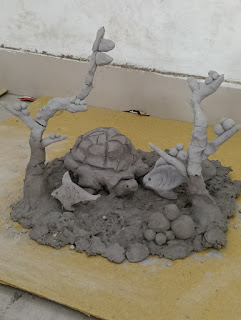
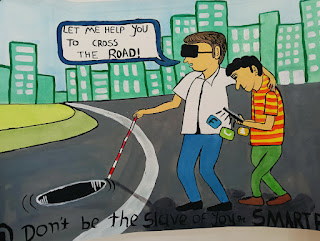
The festival featured a total of #32 competitions organized under five sections, including Literature, Music, Fine Arts, Dance, and Theatre, each with a specific name:
The very first event which was organized in this 32th Youth Festival of Maharaja Krishnakumarsinhji Bhavnagar University was Kala Yatra. The most innovative ‘art conservation’ rally which was on 16 th October 2024, the 1st day of Youth fest was from Shamaldas Arts College to gurukul group of school &College, Sardar Nagar.
Kala Yatra is one of the best art forms where innovative ideas are presented from different perspectives in a very lively way. Though the theme is represented in various tableaux of Kala Yatra from Shamaldas Arts College to gurukul school sardar nagar.
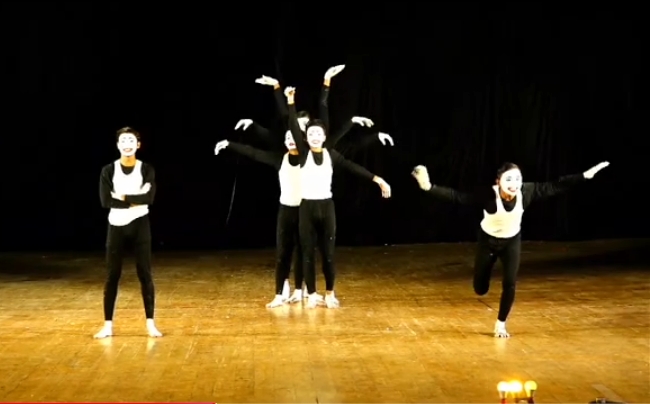
The skit traversed a vast landscape of pressing societal issues, starting with the heavy clouds of unemployment, the cracks in our educational framework, and the contentious storms surrounding rape cases. It ventured into the trials faced by women depicted in *Stree 3*, emphasizing the urgent need for women's empowerment. The performance tackled the provocative theme of “Gandhi Marte Kyun Nahi Hai,” weaving in the unifying anthem of “Hum Sab 1 Hai” (We Are All One). It shed light on the pervasive shadow of corruption in the job market, the notion of paperless transactions, and the dreams encapsulated in “Hu sapana thoda vechu chu” (I Want to Sell My Dreams), alongside a lament for the crumbling roads of Bhavnagar.
Through vivid characterization, the skit portrayed the struggles of individuals grappling with joblessness and financial woes, illustrating how such challenges can cast a pall over their spirits. It addressed the complex realities surrounding rape cases, revealing the barriers of legal systems, societal perceptions, and institutional constraints that often hinder victims from finding justice. The performance also highlighted the marginalized experiences of those who identify outside the binary of male and female, showcasing the discrimination and limited opportunities they face.
Using humor as a powerful lens, the skit cleverly illuminated serious themes, interspersing laughter with poignant commentary. The creative integration of music, varied vocal expressions, and dynamic pacing ensured the narrative remained engaging and resonant, leaving an indelible mark on the audience's minds.
When we compare Bhajans to English literature, we can look at their themes, styles, and cultural features. Bhajans often explore themes like solitude, the search for spirituality, love, and self-discovery. While English literature also covers these topics, Bhajans uniquely highlight them within the context of Gujarati culture. The use of Gujarati phrases, such as "મોતીડા પરોવો પાનબાઈ," adds a cultural touch that is specific to Bhajans. In a similar way, English literature often includes cultural references that depend on the author's background and the story being told.
In terms of structure, Bhajans can be compared to narratives that focus on personal journeys, much like novels or essays. The wide range of Bhajans performed showcases the various themes and experiences found in this literary form. One key feature of Bhajans is their philosophical nature, which often reflects the idea of "Vairagya," or detachment. Lines like "Ghadvaiya mare Thakorji nathi thavu" (Even if the world falls apart, I won’t abandon my Lord), "Mane jya game che tya Haru chu faru chu" (I wander aimlessly in search of my Lord), "AMbani Dale Koyal ji re" (Oh Koyal, sing in the Ambe grove), "Zer to pidha jani jani re" (Drinking poison knowingly), "Shilvant Sadhune" (Oh wise sage), "Odhaji" (Oh Odhaji), and "Dhuni re Dhakhavi re beli" (Oh bonfire, burn brightly) illustrate this deep philosophical meaning.
Mimicry, a challenging and intricate art form, demands that participants master the ability to recreate a wide range of sounds, from the rumble of trains and the whizzing of bullets to the hum of helicopters and the echo of conch shells. They skillfully mimicked animals, creaky doors, chirping birds, famous actors, the fizz of soda bottles, traditional Daklas, the boom of bombs, and even the subtle rhythm of heartbeats. Impressions of personalities like Farah Khan and Kangana Ranaut, along with beloved characters such as Oggy and Doraemon, were brought to life. Some participants added a creative twist by weaving rhymes into their performances, elevating the entertainment value.
• Your experience as Participant / Volunteer ,if you have Participated or volunteer in any event.
My experience as Volunteer during youth festival in Department of English such events as like, essay writing, સ્વ રચિત કાવ્ય પઠન and Quiz both are in our department in afternoon session and we are total nine volunteers and our work was registration of every Participant and help to of them.
I am Kavita Chauhan, A student in department of English MKBU.
Thinking activity 💬🤔
This Blog is a part of thinking activity task of unit 2 T.P.Kailasama’s The Curse or Karna .
- Assigned by Megha Trivedi ma'am
•About the Play:-
T.P. Kailasam’s The Curse or Karna is a significant play in modern Indian English drama, which explores the tragic figure of Karna, one of the most complex characters from the Mahabharata. In this play, Kailasam focuses on Karna’s inner conflict, his quest for identity, and his desire for acceptance. The playwright reinterprets the mythological narrative to shed light on the emotional and psychological dimensions of Karna's character, making him a more human and relatable figure than the glorified hero of ancient texts.
1.) Write a critical note on the deconstruction of myth in The Curse.
• Deconstructing Myth in T.P. Kailasam's 'The Curse or Karna':-
T.P. Kailasam’s play 'The Curse or Karna' offers a profound reinterpretation of the myth of Karna from the 'Mahabharata'. Kailasam's deconstruction of this myth challenges the traditional heroic narratives, exploring the nuanced complexities of Karna’s character through a modern lens. By focusing on Karna’s internal struggles, Kailasam dismantles the glorified image of mythical heroes and brings forth the human side of these divine figures. In doing so, 'The Curse or Karna' becomes not just a retelling of a myth, but a critique of the socio-cultural systems embedded in these narratives.
• Humanizing the Divine:-
In myth, Karna is often depicted as a tragic hero, a loyal warrior bound by fate and honor. However, Kailasam’s play deconstructs this image by humanizing him, making Karna less of a mythical figure and more of an ordinary individual. In the traditional epic, Karna's heroic qualities overshadow his human frailties, but in Kailasam’s portrayal, his insecurities, pain, and moral dilemmas are brought to the forefront. Kailasam strips Karna of his divinity and god-like heroism, turning him into a relatable figure grappling with personal identity, caste injustice, and moral ambiguity.
By doing this, Kailasam opens a critical dialogue about how myths elevate certain figures to an almost unattainable moral stature, while neglecting their human vulnerabilities. In 'The Curse', Karna’s suffering is not the glorified suffering of a hero, but the relatable pain of a man burdened by societal expectations and unfulfilled desires.
• Challenging Caste and Social Hierarchies:-
Kailasam's play subtly critiques the caste system and social hierarchies entrenched in Indian society by deconstructing Karna’s life as a Suta (charioteer’s son). In the traditional 'Mahabharata', Karna’s caste plays a significant role in his exclusion from society despite his exceptional talents. Kailasam takes this aspect of Karna’s identity and amplifies it, showing how caste-based discrimination affects Karna’s psyche and life choices.
Rather than portraying Karna as a mere victim of fate, Kailasam emphasizes how society’s rigid caste structures perpetuate inequality and limit opportunities for individuals, even those with extraordinary capabilities. This deconstruction of the myth reveals the socio-political undercurrents in the 'Mahabharata', questioning the morality of a system that denies a man his rightful place based on birth.
• Reframing the Hero-Villain Dichotomy:-
In deconstructing Karna’s myth, Kailasam also reframes the traditional hero-villain dichotomy. In the epic, Karna’s allegiance to Duryodhana often casts him as a tragic yet misguided figure supporting the wrong side. Kailasam complicates this binary by exploring Karna’s motivations and loyalty to Duryodhana, showing his choices as driven by personal honor and friendship rather than a clear alignment with good or evil.
This reframing challenges the idea of moral absolutes in myths, suggesting that characters like Karna operate within a grey area of ethics, where loyalty, personal suffering, and social obligations influence their decisions. By breaking down the simplistic categorization of heroes and villains, Kailasam presents a more complex moral landscape where characters are not defined by their allegiance, but by the personal battles they fight.
• Fate and Free Will: A Tragic Paradox:
Another critical aspect of the deconstruction in *The Curse* is the way Kailasam deals with the concept of fate. In traditional myth, Karna’s tragic fate is sealed by a divine curse, reinforcing the idea that human beings are powerless in the face of destiny. Kailasam, however, problematizes this narrative by emphasizing the role of free will in Karna’s decisions.
Kailasam’s Karna is not simply a passive figure subject to the whims of fate; he actively chooses his path, even when aware of its tragic consequences. The curse becomes symbolic not just of divine punishment, but of the burdens placed on individuals by societal expectations, personal loyalties, and internal conflicts. By emphasizing Karna’s agency, Kailasam opens up a discussion on the interplay between fate and free will, suggesting that while myth often glorifies the inevitability of destiny, there is a human capacity for choice that myth downplays.
• Conclusion:
Deconstruction as Critique
Through 'The Curse or Karna', T.P. Kailasam offers a profound deconstruction of myth, turning Karna’s epic tale into a modern exploration of identity, social injustice, and the complexities of human nature. By humanizing Karna, challenging caste structures, reframing the hero-villain narrative, and problematizing the role of fate, Kailasam critiques the very foundations of myth that often oversimplify moral and societal realities.
Kailasam’s play encourages readers to question the way myths are constructed, interpreted, and revered. In deconstructing Karna’s story, he not only retells the myth but also reimagines it as a powerful reflection of human experience, making 'The Curse' a compelling commentary on both the ancient and contemporary worlds.
2.)Write a critical note on the class conflict and caste conflict in The Curse.
• Class and Caste Conflict in T.P. Kailasam's The Curse or Karna:
T.P. Kailasam’s The Curse or Karna offers a critical exploration of the entrenched class and caste hierarchies within Indian society, using the myth of Karna from the Mahabharata as its central narrative. While the play reinterprets a well-known mythological figure, Kailasam emphasizes the social struggles Karna faces, revealing how caste and class oppression shape his destiny. Through Karna’s plight, the play delves into the complex dynamics of societal stratification, questioning the moral foundations of a system that discriminates based on birth and status.
Karna’s Caste Identity: The Root of Conflict
At the heart of Karna’s character lies his identity as a Suta, the son of a charioteer, which marginalizes him despite his warrior-like abilities. Throughout the play, Kailasam emphasizes how Karna’s caste, a socially constructed label, serves as an insurmountable barrier between him and the privileges reserved for Kshatriyas (the warrior class). Even though Karna is of royal blood—born to Kunti, the mother of the Pandavas—he is denied recognition due to his upbringing in a lower caste. This discrepancy between Karna's actual birthright and his social status becomes a central theme of conflict, illustrating the inherent unfairness of the caste system.
Kailasam’s critique of caste is not subtle. He uses Karna’s character to expose the contradictions within a system that judges individuals based on birth rather than merit. Karna’s exceptional skills as a warrior and his noble qualities are not enough to gain him the respect he deserves in a society that is rigidly divided by caste. His talent and worthiness are constantly overshadowed by his lower-caste status, highlighting the dehumanizing effects of caste-based discrimination. This caste conflict within The Curse mirrors the real-world experiences of millions of individuals in India who have historically faced exclusion and marginalization based on their birth.
•Class Struggles: The Intersection with Caste:
In addition to caste, Kailasam also explores the theme of class conflict. While caste is the primary determinant of social hierarchy in the play, class differences further complicate Karna’s struggles. His lower status as a Suta places him in a subordinate class, limiting his access to resources, education, and opportunities that are easily available to the upper classes.
Karna’s desire to be recognized as a warrior is continuously thwarted by his class position. Despite his military prowess and generosity, he is denied entry into the exclusive circle of Kshatriyas and is ridiculed by figures like Arjuna and Bhishma, who represent the elite warrior class. His exclusion from the prestigious martial competition, where he is humiliated for his caste, serves as a stark reminder of the intersection between caste and class in determining one's social position. Even when Karna excels, his lower-class background prevents him from being seen as equal to his Kshatriya peers.
Kailasam’s portrayal of Karna’s class conflict also touches on the unequal distribution of power in society. Karna’s loyalty to Duryodhana, a prince from the Kaurava family, is driven in part by his longing for validation and social mobility. Duryodhana, recognizing Karna’s talent, promises him power and prestige, offering him the opportunity to transcend his caste and class limitations. However, this relationship is fraught with irony. Karna’s rise to power is dependent on his loyalty to an elite figure, suggesting that upward mobility within this system is only possible through patronage and servitude, not through merit alone.
• Karna’s Tragic Conflict: Caste, Class, and Fate
The curse that defines Karna’s life is not just a divine punishment, but also symbolic of the larger societal curses of caste and class oppression. Kailasam’s play suggests that Karna’s fate is shaped as much by the social structures around him as by the gods. His exclusion from the privileges of the warrior class and his continuous struggle for recognition are part of a systemic inequality that he cannot escape, no matter how virtuous or skilled he is.
Karna’s internal conflict, too, is shaped by his caste and class. He is acutely aware of his marginalized position, and this fuels both his ambitions and his insecurities. His desire to prove himself, to gain the respect of the Kshatriyas, and to overcome the stigma of his caste leads him to make moral compromises, most notably his alliance with Duryodhana. While Karna knows Duryodhana’s cause is unjust, he remains loyal out of gratitude for the recognition Duryodhana offers him. In this sense, Karna’s personal tragedy is tied to the societal forces that oppress him: caste and class systems that deny him the freedom to live authentically and morally.
• Kailasam’s Critique of Society :
Kailasam’s deconstruction of myth serves as a sharp critique of the social structures that perpetuate caste and class divisions. By focusing on Karna’s suffering, Kailasam questions the legitimacy of a system that prioritizes birth over merit, loyalty over justice, and status over humanity. The play invites audiences to reflect on the ways in which these hierarchies continue to shape individual destinies, much like they did in the ancient world of the Mahabharata.
Through The Curse or Karna, Kailasam illuminates the tragic consequences of caste and class conflicts, both in mythology and in contemporary society. His portrayal of Karna as a man trapped by social forces beyond his control serves as a powerful indictment of the inequities that persist within hierarchical structures. In doing so, Kailasam not only reinterprets the myth of Karna but also uses it as a lens to critique the ongoing struggles for equality and justice in the modern world.
• Conclusion:
In The Curse or Karna, T.P. Kailasam masterfully critiques the deeply entrenched systems of caste and class that shape both individual destinies and societal hierarchies. By humanizing Karna and focusing on his struggles with social discrimination, Kailasam reveals the inherent injustices of a society that values birthright over merit and status over integrity. Karna’s personal tragedy is not only a result of divine curses but also the product of a social order that denies him equality and dignity.
Kailasam’s deconstruction of the myth highlights how the intersection of caste and class creates systemic barriers, trapping individuals like Karna in cycles of marginalization and oppression. His poignant portrayal urges the audience to question the fairness of such systems, both in the mythological past and in contemporary society. In doing so, The Curse or Karna becomes not just a retelling of a classical epic but a powerful commentary on the timeless nature of social inequality and the ongoing struggle for justice.
I am Kavita Chauhan,a student inM.A. sem 3 in Department of English MKBU
Thinking activity 🤔 💬
This blog is part of the thinking activity task for Paper No. 201, Indian English Literature – Pre-Independence, Unit-3. In this post, I have responded to the assigned questions in detail.
-assigned by megha ma'am
Lakshman by Toru Dutt
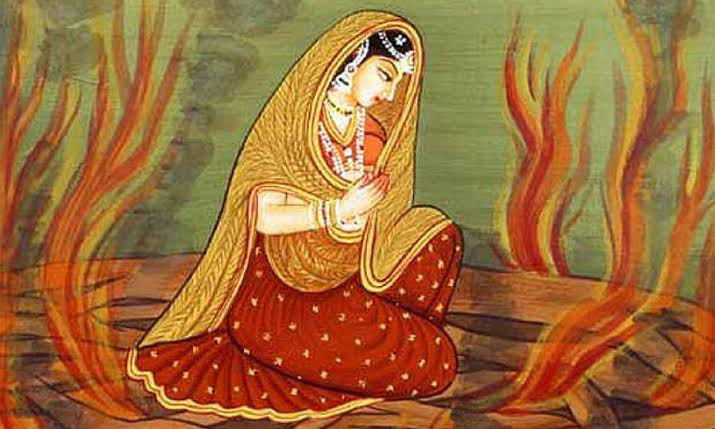
The poem "Lakshman" is written by Toru Dutt, a well-known Indian English poet from the pre-independence era. It was published in a collection called Ancient Ballads and Legends of Hindustan in 1882, after her death. This poem is a ballad that takes the form of a conversation between Sita and Lakshman. In it, Sita shows her strong determination to save her husband, Rama, who she believes might be in danger.
Rewriting mythology is a way for lesser-known and marginalized characters to have their voices heard. Indian epics, like the "Ramayana", have many retellings, and these stories are deeply rooted in our daily lives. The events and themes of the Ramayana can often be seen reflected in our everyday experiences in one way or another.
Q- 1 :- Do you think the character of Sita portrayed by Toru Dutt in her poem Lakshman differs from the ideal image of Sita presented in The Ramayana?
The Character of Sita in Toru Dutt's 'Lakshman' and 'The Ramayana': A Comparative Exploration
Toru Dutt’s poem " Lakshman"offers a unique portrayal of Sita, one that contrasts with the ideal image of Sita presented in 'The Ramayana'. This divergence reflects not only Dutt’s interpretation of the myth but also a broader commentary on the evolving perception of women’s roles in society. While the epic 'The Ramayana' paints Sita as the embodiment of ideal womanhood—devoted, obedient, and passive in the face of suffering—Dutt’s 'Lakshman' offers a Sita who is emotionally assertive, vocal, and more humanized. In this blog, we will explore how Dutt’s portrayal of Sita both aligns with and deviates from the traditional image of the character, and what this might suggest about the poet’s intentions and cultural context.
• Sita in 'The Ramayana': The Ideal Woman
In 'The Ramayana', Sita is revered as the perfect wife, embodying the virtues of patience, devotion, and sacrifice. Her loyalty to Rama, her husband, is unshakeable, even in the face of great adversity. When she is abducted by Ravana and taken to Lanka, Sita endures months of separation from Rama, remaining steadfast in her belief that her husband will come to rescue her. Throughout the epic, her patience and fortitude are highlighted as defining traits, and she rarely steps outside the boundaries of what was expected from women in traditional patriarchal society.
One of the most telling aspects of Sita’s character in 'The Ramayana' is her unquestioning loyalty and submission to Rama’s authority. Despite the injustices she suffers—such as her banishment to the forest after being accused of impurity—Sita maintains her dignity and continues to fulfill her role as the dutiful wife. This idealized version of Sita has become ingrained in the cultural and religious fabric of India, symbolizing the pinnacle of womanly virtue.
• Sita in Toru Dutt’s 'Lakshman': A Different Voice
In contrast, Toru Dutt’s 'Lakshman' presents a more emotional and assertive Sita, revealing a different dimension of her character. In this poem, Sita is not the passive figure seen in 'The Ramayana'. Instead, she becomes a woman who speaks out and takes action, challenging Lakshman’s decision to follow Rama’s orders and not intervene in what she perceives as his dire need for help.
The poem is set during the scene where Sita, left in the care of Lakshman while Rama pursues a golden deer, hears what she believes to be Rama’s cries for help. She begs Lakshman to go to his brother’s aid, but Lakshman, bound by his duty to obey Rama’s command, refuses. In response, Sita’s frustration grows, and she accuses Lakshman of being disloyal and heartless. This scene is striking because it brings forth a side of Sita that is rarely emphasized in 'The Ramayana': her vulnerability, her fear for her husband’s safety, and her willingness to challenge authority when she feels it is necessary.
Dutt’s Sita is far from silent or submissive. She confronts Lakshman, using persuasive language and emotional appeals to try and sway his decision. She is not just a figure waiting passively for rescue or relief; she actively participates in the events unfolding around her. By doing so, Dutt humanizes Sita, allowing readers to see her as more than just a symbol of idealized womanhood. Instead, she becomes a fully realized character with her own emotions, desires, and motivations.
• Comparing the Two Versions of Sita
The differences between Sita’s portrayal in ' The Ramayana' and in 'Lakshman' highlight a shift in how female characters can be interpreted within traditional narratives. In 'The Ramayana', Sita is primarily a figure of submission and self-sacrifice, representing the virtues expected of women in a patriarchal society. Her silence and acceptance of her fate, even in the most trying circumstances, have long been held up as the model for ideal womanhood.
In Dutt’s version, however, Sita’s assertiveness and emotional depth challenge these traditional ideals. Instead of being a passive observer, she becomes an active participant in the narrative, voicing her concerns and attempting to influence the course of events. This more dynamic portrayal reflects a changing perspective on women’s roles in literature and society. While Dutt’s Sita still embodies many of the virtues found in 'The Ramayana'—such as devotion to her husband and a deep sense of responsibility—she is also willing to stand up for what she believes is right, even if it means confronting someone as revered as Lakshman.
• Toru Dutt’s Intentions and Cultural Context
Toru Dutt’s portrayal of Sita likely reflects her own experiences as a woman living in colonial India, where the traditional roles of women were being questioned and redefined. Dutt, as one of the first Indian women to write in English, was herself challenging the boundaries of what was expected of women in her time. By giving Sita a stronger voice in 'Lakshman', Dutt may have been attempting to offer a new interpretation of female strength—one that is not rooted solely in patience and silence, but also in assertiveness and action.
Her version of Sita serves as both a tribute to the original character and a subtle critique of the limited roles available to women in traditional patriarchal narratives. By reimagining Sita in this way, Dutt creates a character who is both deeply connected to her cultural roots and ahead of her time in terms of her emotional expression and independence.
•Contemporary example :
In modern times, a contemporary example that mirrors the shift in the portrayal of Sita in Toru Dutt's 'Lakshman' is the character of 'Devi' in the Netflix series 'Sacred Games'. Like Dutt’s version of Sita, Devi is not a passive character who quietly endures her circumstances. Instead, she is vocal, assertive, and challenges the patriarchal systems around her.
In traditional Indian cinema, female characters were often portrayed in idealized roles, much like Sita in 'The Ramayana' . They were expected to be dutiful wives, mothers, and daughters, accepting their fate with quiet grace. However, contemporary media now showcases more complex and assertive female characters. Devi from 'Sacred Games' is one such character who breaks free from these traditional molds. She fights for survival in a harsh, male-dominated world and makes decisions based on her agency, similar to how Dutt’s Sita in 'Lakshman' confronts Lakshman to protect her husband.
Both Dutt’s Sita and modern characters like Devi demonstrate that women in literature and media are increasingly depicted as active agents in their own stories. They express their emotions, challenge norms, and are not confined to the background, allowing readers and viewers to engage with them on a deeper level. These portrayals reflect the growing recognition of women’s voices and independence, just as Dutt’s 'Lakshman' gave Sita a voice distinct from her portrayal in 'The Ramayana'.
• Conclusion:
In comparing the Sita of 'The Ramayana' with the Sita of Toru Dutt’s 'Lakshman', it becomes clear that Dutt’s portrayal offers a more nuanced and emotionally complex character. While 'The Ramayana’s Sita is a model of traditional virtue, Dutt’s Sita represents a more human and relatable figure, one who is willing to voice her fears and challenge authority when necessary. This difference in portrayal not only highlights the evolving perception of women in literature but also reflects the changing cultural landscape in which Dutt was writing. Through this reimagined Sita, Toru Dutt offers readers a more layered and dynamic interpretation of one of India’s most iconic figures.
Deeno Daan by Rabindranath Tagore:
Rabindranath Tagore’s poem 'Deeno Daan' explores themes of charity, pride, and compassion. It provides a critical reflection on the act of giving, particularly focusing on the social mentality that often distorts the true essence of charity. Tagore emphasizes that charity should not be motivated by pride or the desire for social recognition but should come from a place of humility and genuine compassion.
The poem contrasts two key perspectives: that of the giver and the receiver. The giver, often wealthy or socially powerful, is shown to give charity with an inflated sense of ego, using the act of giving as a way to elevate their own status. This approach strips away the dignity of the receiver, making them feel small and humiliated. The receiver, who is in need, is portrayed as feeling ashamed or belittled by the act of charity, as it reinforces their lower social standing.
Through 'Deeno Daan', Tagore critiques this social mentality and advocates for a more sincere form of charity—one that is motivated by empathy and equality rather than pride. He calls for charity to be given with a pure heart, with the understanding that both the giver and the receiver are equals. True charity, as depicted in the poem, should aim to uplift and empower the receiver while maintaining their dignity.
Ultimately, Deeno Daan serves as a reminder that acts of kindness and charity should not be tainted by ego or social pressures, but should be rooted in selfless compassion. It encourages readers to reflect on the true nature of giving and the impact it has on human relationships.
Q- 2:- What type of social mentality does Rabindranath Tagore present in the poem Deeno Daan?
Rabindranath Tagore’s poem 'Deeno Daan' delves into the social mentality of charity, pride, and true compassion. It presents a critique of the way society often views and practices charity, highlighting the disparity between those who give and those who receive. Through this poem, Tagore exposes how ego, pride, and a sense of superiority can corrupt the noble act of giving. He emphasizes the need for humility and selflessness in acts of charity and suggests that true giving must come from the heart, without expectation of praise or recognition.
• Charity with Ego: A Flawed Social Mentality
In 'Deeno Daan', Tagore paints a picture of a society where giving is often intertwined with ego and social status. Many people donate to the poor not out of genuine concern or compassion but because it boosts their own sense of importance. In such cases, charity becomes a tool for showing off one’s wealth and power, rather than a selfless act of kindness. The giver feels superior to the receiver and takes pride in their ability to give, but this kind of giving is empty and superficial.
Tagore uses the character of the giver in the poem to represent this mentality. The giver is not interested in the needs of the poor but is more concerned with how society will view their act of charity. They believe that by giving, they are doing something great and noble, but in reality, their giving is tainted by pride. This social mentality, according to Tagore, undermines the very purpose of charity, which is to uplift and support those in need, not to elevate the ego of the giver.
•The Receiver’s Humiliation: A Reflection of Social Inequality:
On the other side of this social equation is the receiver of charity, who often feels humiliated by the act of receiving. In 'Deeno Daan', Tagore explores the feelings of those who are forced to accept charity from the wealthy. The receiver feels ashamed, not only because they are in need but because they sense the arrogance and superiority of the giver. This creates a deep sense of inequality and resentment, as the poor are made to feel small and insignificant.
Tagore criticizes the mentality of giving that strips away the dignity of the receiver. Instead of helping to uplift the poor, such charity reinforces social divisions and deepens the sense of inferiority among those who are less fortunate. This social inequality is a major theme in the poem, as Tagore calls for a form of giving that restores the dignity of the receiver, rather than diminishing it.
• True Charity: Humility and Compassion:
Tagore’s message in 'Deeno Daan' is clear: true charity must come from a place of humility and compassion. It is not about boosting one's social status or gaining praise from others; it is about helping those in need without any desire for recognition or reward. In the poem, Tagore emphasizes that real giving is done with a pure heart, where the giver does not see themselves as superior to the receiver but as equal human beings.
This idea is rooted in the concept of empathy—understanding the struggles and pain of others and wanting to help out of genuine kindness. Tagore suggests that when charity is done with humility, it becomes a meaningful act that brings people together, rather than reinforcing social divisions. The giver and the receiver both maintain their dignity, and the act of giving is transformed into a powerful expression of human solidarity and love.
• A Call for Change: Rethinking Social Charity:
Through 'Deeno Daan', Tagore calls for a change in the way society views and practices charity. He urges people to rethink their motivations and to give with true compassion and humility. The poem serves as a critique of a society that values wealth and status over kindness and equality, and it challenges the reader to adopt a more thoughtful and empathetic approach to giving.
Tagore’s critique of the social mentality around charity is still relevant today. In modern times, many acts of giving are still accompanied by a sense of pride and superiority, as people donate to charity to improve their social standing or public image. However, as Tagore points out in his poem, this kind of giving does little to address the real issues of inequality and suffering. True charity must come from the heart and must be motivated by a genuine desire to help, not by the desire to appear generous.
• Examples:-
A contemporary film that reflects the mentality described in Tagore's 'Deeno Daan' is 'The White Tiger' (2021), based on the novel by Aravind Adiga. The film explores the complex relationship between the wealthy and the poor in India and how acts of charity and kindness often come with hidden motives or a sense of superiority.
In 'The White Tiger', the wealthy characters, such as the landlords Ashok and Pinky, initially display what they perceive as kindness towards Balram, their servant. They believe they are generous because they give him money and treat him “better” than other servants. However, their charity is laced with condescension and a sense of superiority, much like the mentality Tagore critiques in 'Deeno Daan'. Balram is keenly aware of this dynamic, understanding that their “kindness” is superficial, and it only reinforces the power imbalance between them.
Another example is the Netflix series 'Delhi Crime' (2019), which tells the true story of a horrific crime in India. In one of the subplots, you see acts of charity where politicians and high-profile figures come forward to “support” the victims, but their motivations are not always genuine. Some characters seek public recognition for their support, more for political gains than for genuinely helping the victims. This highlights the problematic way in which public figures often engage in charity for their own benefit, echoing the critique of superficial charity found in 'Deeno Daan'.
Both examples from 'The White Tiger' and 'Delhi Crime' show how modern films and series address the complex dynamics of giving, where acts of charity often mask deeper issues of pride, ego, and inequality, reflecting Tagore’s insights from 'Deeno Daan'.
• Conclusion:
In 'Deeno Daan', Rabindranath Tagore sheds light on the flawed social mentality surrounding charity, where ego and pride often overshadow true compassion. He calls for a deeper understanding of what it means to give and emphasizes the importance of humility, empathy, and selflessness in acts of charity. Tagore’s poem serves as a timeless reminder that real charity is not about boosting one’s own sense of importance but about helping others in a way that preserves their dignity and fosters a sense of equality. Through this powerful message, 'Deeno Daan' continues to inspire readers to reflect on the true nature of giving and the impact it can have on both the giver and the receiver.
I am Kavita Chauhan,a student inM.A. sem 3 in Department of English MKBU
Thinking activity 💬🤔
This blog is a part of the thinking activity of Cultural studies paper
-Assigned by Dilip barad sir
In this blog, I will discuss the relationship between power and media in cultural studies, and explore what it means to be truly educated.
Cultural Studies:-
• Media and Power:
Media studies is a broad field that examines the history, content, and impact of various forms of collective communication. The primary role of media is to inform the public, provide facts, and foster criticism and debate, ensuring that information is scrutinized and verified. However, in contemporary society, we often see that media does not serve the audience effectively; instead, it often caters to those in power.
Many media outlets practice "psychophancy," prioritizing the interests of powerful individuals or groups over their responsibility to the public. For instance, during the farmers' protests in India, many news channels chose to focus on the Aryan Khan drug case, diverting attention away from critical issues like the protests themselves. This redirection illustrates how media can be manipulated to serve the interests of those in power rather than the public good. In this context, it becomes clear that power dynamics play a significant role in shaping media narratives.
Moreover, the relationship between media and advertising complicates this further. While the work of media is to inform and engage audiences, it is also intertwined with the commercial interests of advertisers. Many media channels are owned by large business networks, which can lead to a situation where the audience becomes the product. The media, rather than just selling products, ends up selling its audience's attention and loyalty to advertisers. This raises important questions about the integrity of news reporting: Who is in power? Who owns the channel? Are news outlets biased towards those in power, or do they remain committed to true journalism?
In answering these questions, we can better understand the media landscape and its implications for society. It is essential for audiences to critically engage with media, to recognize potential biases, and to seek out diverse sources of information. By doing so, they can hold media accountable and ensure that it serves its rightful purpose of informing the public and fostering a healthy democratic discourse. Understanding the underlying power structures in media is crucial for recognizing how information is shaped and disseminated in contemporary society.
Here in the above video we can clearly see what journalism is and what supporting power. Female journalists lean towards power while the male journalist is counter questioning and trying to go against power.
• Role of Education:
Education is typically defined as the process of receiving or providing organized instruction, especially in schools or universities. It encompasses both teaching and learning. However, this brings up an important question: what does it mean to be "truly educated"? Does being truly educated simply mean achieving the highest grades? The answer is no.
According to Noam Chomsky, being truly educated involves the ability to inquire and create knowledge based on the resources available. A truly educated person knows where to find information, how to look for it, and what to focus on. They can ask meaningful questions and think critically about the world around them. This type of education allows individuals to create and think independently, free from external control or influence.
As the saying goes, “It’s not important what you cover in class; what matters is what you discover.” True education is about developing the skills and knowledge necessary to explore deeper meanings and recognize complexities that may not be immediately apparent. It isn’t merely about holding certificates, diplomas, degrees, or doctorates. Instead, it focuses on enhancing one’s ability to think critically, be practical, and understand various aspects of any given situation.
Being truly educated means cultivating a mindset of curiosity and exploration. It’s about learning how to analyze information, think creatively, and engage with different perspectives. A truly educated person is adaptable, capable of learning throughout life, and willing to challenge conventional wisdom. They understand that education is not just a set of accomplishments or credentials but a continuous journey of personal growth and development.
Ultimately, true education empowers individuals to navigate the complexities of life and make informed decisions. It encourages them to be active participants in society, capable of contributing meaningfully to discussions and solving problems. In this sense, being truly educated is about becoming a thoughtful, engaged citizen who can understand and respond to the world’s challenges.
The literacy rate is often determined simply by whether a person can write their name, but this does not capture the full meaning of being educated. Being truly educated means having the ability to read and understand the world around us, not just being able to write. Reading and writing are essential tools for education, but knowing a language alone does not make someone educated.
Real education is not just about filling our minds with information or debates; it’s about learning and understanding from those debates. Learning about controversies helps students understand important values. It offers them a broader perspective on various situations and encourages self-education about what is right and wrong.
In short, a truly educated person grows not just in the classroom but also in life outside of it. They have the ability to understand their surroundings, view problems from different angles, and find multiple solutions. Even if they don’t get high marks, they have the skills to navigate real-life challenges. A truly educated person can read between the lines and avoid falling into the traps set by authorities. They use their practical knowledge in everyday life and share it with others. Thus, real education goes beyond just textbook learning; it includes experiences, critical thinking, and helping others.
A contemporary example that illustrates the difference between mere literacy and true education can be seen in the context of social media literacy and the spread of misinformation.
In today’s digital age, many individuals can read and write and are considered literate by traditional standards. However, the ability to critically analyze information, discern credible sources, and understand the nuances of various viewpoints is what constitutes true education. For instance, during events like the COVID-19 pandemic, social media platforms became flooded with information, including both accurate data and misinformation regarding health guidelines and vaccines.
Individuals who were simply literate might have shared posts without questioning their validity, contributing to the spread of false information. In contrast, those who are truly educated sought out reliable sources, fact-checked claims, and engaged in informed discussions about health policies. They understood the importance of evaluating the context of the information presented and recognizing bias in reporting.
Another example is the recent climate change debates. Many young people have become educated advocates for climate action, using their understanding of environmental issues to promote awareness and policy changes. They are not just aware of the facts presented in textbooks; they actively engage with the complexities of climate science, economic implications, and ethical considerations. They attend protests, participate in discussions, and use social media to raise awareness, demonstrating that their education extends beyond the classroom.
These examples highlight how true education involves critical thinking, active engagement with real-world issues, and the ability to navigate complex information, rather than simply possessing basic literacy skills.
• Understanding of Power in Cultural Studies:
Cultural studies can be hard to define, mainly because the word "culture" is itself complex. However, it can be explained as an interdisciplinary field that looks at the political dynamics of modern culture, including popular culture, and its historical roots. Researchers in this field often explore how cultural practices are connected to larger systems of power. These systems involve factors like ideology, social class, national identity, race, sexual orientation, gender, and age. The goal of cultural studies is to understand how meaning is created, spread, challenged, and linked to power and control, as well as how it emerges from social, political, and economic contexts within a particular society.
Michel Foucault came up with the idea ‘power is a whole complex of forces; it is that which produces what happens’. The question arises what is power? Power is an ability or capacity to do something or act in a particular way. In other words, power is an ability to make others do what one wishes to. How does one attain power? There are 6 sources of power
Physical force
Wealth
State government
Social norms
Ideas
Numbers
Foucault challenged the idea that power only exists during specific events or in certain groups of people. He argued that power is everywhere, acting like a 'metapower' or 'regime of truth' that spreads throughout society, constantly shifting and being renegotiated. When Foucault uses the term 'power/knowledge,' he means that power is created through accepted knowledge, scientific understanding, and what society considers to be the 'truth.' In his view, knowledge gives power, and this power shapes what we see as true. Foucault believed that power is not just a political issue but something that influences our daily lives and is present in our social interactions and behaviors.
One of the key goals of Cultural Studies is political engagement. Cultural critics often oppose the power structures in society, aiming to question and challenge authority.
We often fail to notice that we are always under the influence of power. Power is constantly used through surveillance, which works to enforce social conformity and discipline. This idea—that power controls us under the guise of discipline—can be seen in places like prisons, schools, and mental hospitals. People are trained to follow rules, believing it’s for their own good, but in reality, it’s the power of authorities that limits their freedom. Surveillance as a tool of power is clearly demonstrated in George Orwell's novel *1984*, where language, unity, and sharing ideas—all forms of power—are banned in the fictional society of Oceania.
While it could be argued that control is necessary in schools and asylums to manage students and patients, we also see examples of power controlling us in everyday life. Power influences our thinking so subtly that we often don’t question it and are easily swayed by its ideas. For example, programs like 'Thali Bajao' and 'Diya Jalao' during the COVID-19 pandemic, which were promoted as ways to thank frontline workers, may have been distractions from the real issues. No one challenged or questioned these actions, showing how power can keep us in line without us even realizing it.
Symbolically, we can see power at play when someone in authority tries to promote their own image—like by creating statues of themselves or spreading their photos everywhere. This also reveals a lot about the culture of society. But how can one challenge such power? The answer is to read and write. Knowledge empowers people, giving them a voice in society. While power often rests with those in authority, it also comes from the masses—the people themselves are a major source of power. By reading, understanding the reasons behind events, and writing about them, one can push back against authority.
Foucault also acknowledged that power isn't always negative; it can also be a productive and positive force in society. For him, power is not about force, domination, or authority. It is impersonal—it isn't something owned or controlled by individuals, groups, or institutions. Instead, power is the result of how actions influence other actions. Foucault’s view of power is that it’s blind and doesn’t have a specific purpose or agenda.
For example, think about social media today. When people share their opinions, they influence others' thoughts and actions, creating a ripple effect. This is a form of power that doesn’t belong to any one person but is shaped by the actions of many.
•Cultural Practices:
Media plays a significant role in shaping cultural norms and practices, especially in how it represents various groups within society. The representation of marginalized groups in media is crucial because it influences cultural identities, perceptions, and societal attitudes toward these communities.
# Media Representation and Cultural Identities
1. Visibility and Recognition: Media representation provides visibility to marginalized groups, which is essential for recognition and validation of their identities. For example, the portrayal of LGBTQ+ characters in television shows and films has helped normalize diverse sexual orientations and gender identities, allowing individuals within these communities to see themselves represented in mainstream narratives. When media includes authentic stories and characters from marginalized backgrounds, it fosters a sense of belonging and validation for those communities.
2. Stereotyping and Misrepresentation: Conversely, media can perpetuate harmful stereotypes that shape public perceptions. For instance, the portrayal of Black individuals in media has often been fraught with stereotypes that emphasize criminality or inferiority, influencing societal views and treatment of Black communities. These negative representations can reinforce existing biases and contribute to systemic discrimination, affecting how individuals identify and navigate their cultural identities.
3. Cultural Narratives: Media also plays a role in constructing cultural narratives that shape how marginalized groups view themselves and how society perceives them. For instance, the representation of Indigenous cultures in films can either celebrate and honor their traditions or perpetuate myths and misunderstandings. The narratives presented in media can influence the cultural identity of these groups, either empowering them or reinforcing oppressive stereotypes.
#Media as a Tool for Resistance
Media can also serve as a powerful tool for resistance against dominant power structures. This occurs in several ways:
1. Challenging Narratives: Marginalized groups can use media to challenge dominant narratives and present their perspectives. Social media platforms, for example, have provided a space for activists to share their stories, mobilize communities, and raise awareness about issues affecting their lives. Movements like #BlackLivesMatter and #MeToo have effectively utilized media to highlight injustices and demand accountability from those in power.
2. Creating Counter-Narratives: Filmmakers, writers, and artists from marginalized backgrounds often create works that counter mainstream representations. By sharing authentic stories and experiences, they can redefine cultural identities and challenge societal norms. For example, the rise of independent films and web series that focus on the lives of LGBTQ+ individuals allows for a broader understanding of their experiences, contributing to a more inclusive cultural landscape.
3. Mobilization and Advocacy: Media serves as a platform for organizing and advocacy. Documentaries, podcasts, and social media campaigns can inform the public about social issues and rally support for change. By documenting struggles and highlighting the voices of marginalized individuals, media can amplify calls for justice and reform.
Conclusion
In sum up media representation significantly influences cultural identities, particularly for marginalized groups. While it can perpetuate stereotypes and reinforce negative perceptions, media also holds the potential to challenge dominant power structures and provide a platform for resistance. By using media to tell their stories and advocate for change, marginalized communities can assert their identities, reshape cultural narratives, and work toward a more equitable society. The impact of media on cultural norms and practices underscores the importance of diverse and accurate representation in shaping a just and inclusive world.
• Critical Media Consumption:
Reflecting on media consumption habits reveals how deeply ingrained media is in shaping our perspectives and everyday decisions. For many, media serves as the primary source of information about the world, influencing opinions on various topics, from politics to lifestyle choices. Whether through news articles, social media platforms, or television shows, the media we consume can significantly affect how we perceive reality.
For instance, the way news is presented can frame our understanding of current events. A sensationalized report on a particular issue might evoke fear or anger, while a balanced, in-depth analysis might encourage critical thinking and discussion. Similarly, social media algorithms often curate content that aligns with our existing beliefs, creating echo chambers that can limit exposure to diverse viewpoints. This can lead to a skewed worldview, reinforcing biases rather than challenging them.
On a personal level, media consumption influences daily choices, such as what products to buy, which causes to support, and how to engage in social discussions. For example, advertising campaigns can shape perceptions of beauty, success, and happiness, leading to choices that reflect societal standards rather than personal values. If I frequently engage with content that promotes sustainable living, for instance, I may be more inclined to make eco-friendly choices in my own life, such as reducing plastic use or supporting local businesses.
Adopting a critical approach to media consumption is essential for becoming a truly educated person. This means questioning the sources of information, recognizing biases, and seeking out diverse perspectives. By critically evaluating the media we consume, we can better understand the underlying motives behind messages and avoid being misled. This approach encourages deeper thinking about the content presented, allowing us to form more nuanced opinions.
Moreover, a critical perspective fosters awareness of media's role in shaping societal narratives and power dynamics. It empowers individuals to engage actively with the media landscape, challenging misinformation and advocating for ethical standards in journalism and advertising. For example, when encountering a controversial topic in the news, a critical consumer might research various sources, compare perspectives, and participate in discussions that promote understanding rather than division.
In conclusion, media consumption habits profoundly influence our worldview and daily choices. By adopting a critical approach to media, we can cultivate a more informed and balanced perspective, ultimately contributing to our growth as educated individuals. This mindset enables us to navigate the complexities of the modern world thoughtfully and responsibly, making informed choices that align with our values and contribute positively to society.