Thursday, March 20, 2025

Assignment Paper No.: 206 ; African Literature.

 Hello viewers 👋 

I am Kavita Chauhan,a student in MA sem- 4 department of English MKBU.


Assignment Paper No.: 206 ; African Literature.


This blog is part of an assignment for Sem-4, Paper No 206 African literature assigned by Dr. Dilip Bard Sir, Department of English, MKBU. In this assignment, I am discussion: From Revolution to Betrayal: A Study of History, Sexuality, and Gender in Petals of Blood


•Academic Information:


Name: Kavita N. Chauhan  

Roll No.: 15  

Enrollment No.: 5108230010  

Semester: 4 

Paper No.: 206

Paper Code: 22413

Paper Name: African literature 

Topic:  From Revolution to Betrayal: A Study of History, Sexuality, and Gender in Petals of Blood

Submitted to: Smt. S.B. Gardi, Department of English, MKBU  

E-mail: kavitanchauhan2002@gmail.com  


•Table of Contents:


1. Abstract

2. Keywords

3. Introduction

4. Ngugi wa Thiong’o and Novel : A Brief Overview

5. Synopsis of Petals of Blood

6. Historical Narrative in Petals of Blood

6.1. Colonial Legacy and Its Impact

6.2. Neocolonial Exploitation and Disillusionment

6.3. Generational and Global Struggles

7. Sexuality as a Site of Power and Oppression

7.1. Wanja and the Commodification of Female Sexuality

7.2. The Role of Prostitution in Economic Survival

7.3. Sexuality as a Form of Resistance

8. Gender and Patriarchy in Petals of Blood

8.1. Women’s Roles in a Changing Society

8.2. The Intersection of Gender and Class Struggles

8.3. Women’s Agency and Subversion of Patriarchy

9. Literary Elements and Their Role in the Narrative

10. Conclusion

11. References 


1. Abstract


Ngugi wa Thiong’o’s Petals of Blood is a powerful literary critique of post-colonial Kenya, exploring themes of historical oppression, gender dynamics, and sexuality. The novel exposes the continuity of colonial exploitation under neocolonial governance, demonstrating how power structures remain entrenched even after independence. Through characters such as Wanja, Karega, Munira, and Abdulla, Ngugi examines the intersections of gender and class, the commodification of female sexuality, and the broader historical struggles of Kenya. This paper investigates how Ngugi constructs history as a battleground of economic and social oppression, critiques gender roles within a patriarchal system, and portrays sexuality as both a tool of subjugation and a potential means of resistance.


2. Keywords


Ngugi wa Thiong’o, Petals of Blood, colonialism, neocolonialism, history, sexuality, gender, feminism, capitalism, African literature.


3. Introduction


Ngugi wa Thiong’o is one of Africa’s most politically engaged literary figures, whose works interrogate colonialism, neocolonialism, and the socio-economic struggles of the African people. Petals of Blood (1977) serves as both a historical record and a critique of post-independence Kenya, revealing how political and economic elites betray the promises of liberation. The novel’s themes of history, sexuality, and gender reflect the ongoing struggles of the working class and marginalized groups.


Through its complex narrative structure, Petals of Blood critiques the myth of independence, highlighting the ways in which colonial oppression persists in different forms. Women, particularly Wanja, are at the center of the novel’s gender discourse, navigating a world where their bodies and labor are commodified. This paper explores these themes by analyzing the novel’s historical narrative, gender politics, and representation of sexuality within the socio-economic landscape of Kenya.


4. Ngugi wa Thiong’o and Novel: A Brief Overview


Ngugi wa Thiong’o was born in 1938 in Kenya, during the British colonial period. His early works, such as Weep Not, Child (1964) and A Grain of Wheat (1967), focused on the Mau Mau rebellion and the struggles of independence. Over time, his writing became increasingly political, leading him to abandon English in favor of his native Gikuyu, as seen in Caitani Mutharabaini (1981). Petals of Blood marked a significant turning point in his career, directly attacking the corruption of Kenya’s post-independence elite. His critique of the government led to his imprisonment in 1977


•The Novel  Petals of Blood:


Ngugi wa Thiong’o’s Petals of Blood (1977) is a politically charged novel that critiques post-independence Kenya, exposing the corruption, economic exploitation, and social injustices that persist despite the end of British colonial rule. The novel is set in Ilmorog, a rural village that undergoes rapid transformation due to capitalist and political forces. Through the interconnected stories of four protagonists—Munira, Karega, Wanja, and Abdulla—Ngugi explores themes of historical oppression, gender inequality, and the commodification of sexuality.


The novel unfolds through a complex narrative structure, blending past and present to reveal how Kenya’s independence has failed to bring true freedom to its people. Instead, the promises of liberation are betrayed by a new elite who continue to exploit the working class. Petals of Blood not only critiques Kenya’s ruling class but also situates its struggles within a broader global context of anti-colonial and socialist movements.


One of the novel’s most striking aspects is its portrayal of gender and sexuality. Women, particularly Wanja, are shown as both victims of patriarchal oppression and active agents of resistance. The novel critiques how female bodies are commodified within a capitalist society, while also highlighting moments where women reclaim power within these structures.


Through its rich symbolism, historical depth, and unflinching political stance, Petals of Blood remains one of Ngugi wa Thiong’o’s most significant works, challenging readers to confront the harsh realities of post-colonial Kenya and beyond.


5. Synopsis of Petals of Blood


The novel is set in Ilmorog, a rural village that undergoes drastic changes due to economic and political shifts. The narrative follows four protagonists—Munira, Karega, Wanja, and Abdulla—each representing different aspects of Kenya’s post-independence reality. As Ilmorog transforms from a struggling village into a capitalist town, the characters witness firsthand the corruption and betrayal of national leaders. The novel also revolves around a murder investigation, but its real focus is on the systemic injustices that define Kenya’s socio-political landscape.


6. Historical Narrative in Petals of Blood


6.1. Colonial Legacy and Its Impact


Ngugi presents history as a continuous cycle of oppression and resistance. The novel traces the colonial past of Kenya, illustrating how British rule exploited land and labor, forcing people into poverty. Abdulla, a former Mau Mau fighter, symbolizes the sacrifices made for independence, only to find himself abandoned by the very government he fought to establish.


6.2. Neocolonial Exploitation and Disillusionment


Rather than achieving genuine freedom, post-independence Kenya falls under the control of a corrupt elite. The transformation of Ilmorog into New Ilmorog highlights how economic policies favor the rich while displacing the poor. The narrative critiques how multinational corporations and local politicians maintain colonial systems of exploitation.


6.3. Generational and Global Struggles


Ngugi draws parallels between Kenyan struggles and global black liberation movements. The generational struggles of the Gikuyu people are interwoven with broader decolonization efforts, emphasizing the interconnected nature of African, Caribbean, and African-American resistance.


7. Sexuality as a Site of Power and Oppression


7.1. Wanja and the Commodification of Female Sexuality


Wanja’s life exemplifies how women’s bodies are commodified within a capitalist and patriarchal society. Her journey from an innocent girl to a brothel owner mirrors the limited economic options available to women.


7.2. The Role of Prostitution in Economic Survival


Wanja turns to prostitution not out of desire but as a means of survival. Her experiences reveal how women in post-colonial Kenya navigate economic exploitation and limited opportunities.


7.3. Sexuality as a Form of Resistance


Despite being objectified, Wanja reclaims her agency by using her sexuality strategically. She controls her brothel and influences men who underestimate her, showcasing resistance within an oppressive system.


8. Gender and Patriarchy in Petals of Blood


8.1. Women’s Roles in a Changing Society


Women in the novel challenge traditional gender norms. Nyakinyua represents cultural wisdom, while Wanja embodies the struggle for survival in a male-dominated society.


8.2. The Intersection of Gender and Class Struggles


Ngugi highlights how gender oppression intersects with class struggle. Poor women, like Wanja, face double exploitation—first as women, then as members of the working class.


8.3. Women’s Agency and Subversion of Patriarchy


While patriarchal structures dominate, women resist and subvert these norms. Wanja’s journey, though tragic, reflects a defiance against societal expectations.


9. Literary Elements and Their Role in the Narrative


Ngugi employs various literary devices to reinforce his themes:


Symbolism: The transformation of Ilmorog represents Kenya’s shift from rural tradition to capitalist exploitation.


Allusion: References to historical events and literature, such as the Mau Mau uprising and Caribbean literature, enrich the novel’s discourse.


Foreshadowing: Wanja’s family history with fire anticipates the novel’s climactic events.


10. Conclusion


Petals of Blood is a landmark novel that interrogates the failures of post-independence Kenya. Through its historical narrative, gender politics, and depiction of sexuality, Ngugi critiques the persistence of colonial structures in new forms. The novel remains a vital text in African literature, urging readers to question power dynamics and advocate for genuine social justice.


Thank  You  for Visiting ! 

Words : 1,505

Images: 03


11. References:


Ngugi wa Thiong’o. Petals of Blood. Heinemann, 1977.


Nicholls, Brendon. “History, Intertextuality and Gender in Ngugi wa Thiong’o’s Petals of Blood.” Moving Worlds: A Journal of Transcultural Writings, vol. 14, no. 1, 2014, pp. 71-76.


Thursday, February 27, 2025

Assignment of Paper 208: Comparative Literature & Translation Studies

Hello viewers 👋 

I am Kavita Chauhan,a student in MA sem- 4 department of English MKBU.


Assignment Paper No: 208 Comparative Literature & Translation Studies


This blog is part of an assignment for Sem-4, Paper No 208 Comparative Literature & Translation Studies assigned by Dr. Dilip Bard Sir, Department of English, MKBU. In this assignment, I am discussion on Revolutionizing Comparative Literature: The Impact of Digital Humanities and AI on Literary Studies


•Academic Information:


Name: Kavita N. Chauhan  

Roll No.: 15  

Enrollment No.: 5108230010  

Semester: 4

Paper No.: 208

Paper Code:  22415

Paper Name: Comparative Literature & Translation Studies

Topic: Revolutionizing Comparative Literature: The Impact of Digital Humanities and AI on Literary Studies

Submitted to: Smt. S.B. Gardi, Department of English, MKBU  

E-mail: kavitanchauhan2002@gmail.com  


 Digital Humanities and Comparative Literature in the Age of Technological Transformation

A Critical Analysis of Todd Presner’s Vision and Contemporary Developments


Table of Contents


1. Abstract

2. Introduction

3. Digital Humanities and Comparative Study

3.1 Comparative Media Studies

3.2 Comparative Data Studies

3.3 Comparative Authorship and Platform Studies

4. The Present of Comparative Literature

4.1 NLP and Machine Learning in Literary Analysis

4.2 Increased Digitization of Literature

4.3 Data Visualization in Literary Research

4.4 Spatial Humanities and Mapping Literary Narratives

4.5 Born-Digital Objects and New Media Narratives

4.6 Open Data & Collaboration in Literary Studies

4.7 Immersive Technologies in Digital Literature

5. Conclusion

6. Works Cited


Abstract:


Todd Presner’s seminal article, Comparative Literature in the Age of Digital Humanities: On Possible Futures for a Discipline (2011), explores how digital humanities have transformed comparative literature. He argues that digital tools disrupt traditional print-based methodologies and necessitate new approaches to studying texts, authorship, and cultural narratives.


This paper critically examines Presner’s vision in the context of contemporary advancements in artificial intelligence (AI), natural language processing (NLP), data visualization, and immersive storytelling. By assessing the role of digital tools in literary studies, this research highlights how technology redefines global literary discourse, comparative textual analysis, and the evolution of authorship.


Keywords: Digital Humanities, Comparative Literature, AI, Computational Analysis, New Media


• Introduction:


Todd Presner compares the digital age to past transformative moments in history, such as the advent of the printing press and European exploration. He argues that the rise of digital technologies is reshaping literary studies in ways that require new intellectual frameworks and methodologies.


Digital humanities challenge the traditional view of literature as a fixed, print-based medium. Today, literature exists across multiple formats, including hypertext fiction, interactive narratives, and AI-generated texts. These new forms of literary expression demand novel analytical techniques, moving beyond conventional close reading to incorporate data analysis, computational modeling, and digital visualization.


Futuristic Digital Library


A futuristic digital library with holographic texts and interactive literature screens.


This paper explores the evolution of comparative literature in the digital age, assessing how digital tools influence textual studies, authorship, and global knowledge dissemination.


3. Digital Humanities and Comparative Study


3.1 Comparative Media Studies


Comparative media studies examine how different media formats—both digital and traditional—affect literary production and consumption.


Key Considerations:


How do print and digital narratives differ in structure and reception?


How has social media influenced contemporary literature?


What role does multimedia storytelling play in shaping modern narratives?


Digital media have altered how stories are consumed and interpreted. In earlier times, literature was limited to the printed page, but now narratives take new shapes in podcasts, webcomics, and interactive digital fiction. The rise of platforms like Wattpad and Medium has empowered independent authors, bypassing traditional publishing barriers and reaching a global audience directly.


3.2 Comparative Data Studies


With the rise of digital archives, computational analysis tools help scholars study literary trends across time and geography.


Examples:


Mapping the development of literary genres over centuries


Analyzing thematic patterns across different cultures


Using AI to compare authorial styles


AI-Powered Data Visualization


A researcher using AI-powered data visualization tools to analyze literary trends over time.


For example, scholars have used Latent Dirichlet Allocation (LDA), a topic modeling algorithm, to detect hidden themes in literature. Sentiment analysis has been applied to novels to understand the emotional depth of characters, while Named Entity Recognition (NER) allows researchers to extract information on characters and locations from large text corpora.


3.3 Comparative Authorship and Platform Studies


The digital age has challenged traditional notions of authorship. Collaborative writing platforms, AI-generated texts, and crowd-sourced storytelling have changed how literature is created.


Key Questions:


Who owns digital literature in the era of open-source platforms?


How does AI alter our perception of authorship?


What is the impact of participatory culture on literary evolution?


For instance, Google’s AI Storytelling Lab has experimented with AI-assisted writing tools, where machines suggest narrative structures while human authors refine the storytelling process. This raises ethical questions about originality and the creative role of AI in literature.


4. The Present of Comparative Literature


4.1 NLP and Machine Learning in Literary Analysis


Natural Language Processing (NLP) enables researchers to analyze vast textual datasets, uncovering hidden patterns in literature.


Some key applications include:


Topic Modeling: Identifying recurring themes in historical novels


Sentiment Analysis: Evaluating emotional tones in literary texts


Named Entity Recognition (NER): Mapping relationships among characters


Tools such as Voyant Tools and Google’s BERT help analyze literature at both macro and micro levels.


4.2 Increased Digitization of Literature


With digital libraries such as HathiTrust and Google Books, comparative literary studies can now access global texts for large-scale analysis.


This has enabled scholars to:


Access rare and non-English texts


Compare different translations of the same literary work


Identify historical shifts in literary trends through corpus analysis


4.3 Data Visualization in Literary Research


Visualization tools like Voyant Tools and Tableau help scholars explore literary patterns through interactive graphs and charts.


Data visualization helps in:


Tracking the evolution of literary genres


Mapping character relationships in complex narratives


Identifying thematic shifts over time


4.4 Spatial Humanities and Mapping Literary Narratives


GIS-based tools allow researchers to map real and imagined literary spaces. This helps:


Visualize the movements of characters across geographical locations


Analyze the impact of setting on narrative structure


4.5 Born-Digital Objects and New Media Narratives


Born-digital literature, such as interactive fiction and AI-generated storytelling, has reshaped narratives. Examples include:


Twine-based interactive fiction


Hypertext novels like afternoon, a story


4.6 Open Data & Collaboration in Literary Studies


Futuristic Digital Collaboration Hub


A futuristic digital collaboration hub where scholars work together on digital literature research projects.


Scholars use GitHub to co-edit literary analysis projects, making research more accessible and reproducible.


4.7 Immersive Technologies in Digital Literature


Data visualization has emerged as a powerful tool in literary studies, enabling scholars to analyze complex textual patterns through graphical representations. Unlike traditional close reading methods, visualization techniques provide an overview of large-scale literary datasets, allowing researchers to identify trends, relationships, and structures that may not be immediately evident through text-based analysis.


Types of Data Visualization in Literary Research


1. Word Clouds and Frequency Analysis


Tools like Voyant Tools and Google’s Ngram Viewer help visualize the most frequently used words in a text.


Word frequency analysis can reveal dominant themes, authorial style, and shifts in linguistic patterns across different time periods.


For example, an analysis of Shakespeare’s plays through a word cloud could highlight recurring motifs such as “power,” “fate,” and “love.”


2. Character Network Analysis


Network graphs help map character relationships and interactions within a novel or play.


These visualizations allow scholars to analyze how frequently characters appear together and who the central figures in a narrative are.


Example: A character network analysis of War and Peace reveals Pierre Bezukhov as the most connected character, emphasizing his role in the novel’s social structure.


3. Thematic Mapping Across Literature


Scholars use visualization tools to track the presence of key themes across multiple texts or historical periods.


Example: A study of Frankenstein and Dracula could use sentiment analysis to compare how fear and horror are expressed in different gothic literary traditions.


4. Narrative Structure and Temporal Trends


Time-series analysis helps examine how a novel unfolds over time, identifying moments of heightened emotional intensity or plot development.


Digital tools such as TextPlot and Plotly create visual models of narrative progression, which can be useful for studying literary pacing and structural composition.


5. Geospatial Analysis in Literature


Geographic Information Systems (GIS) allow researchers to map locations in literature, linking texts to real-world settings.


Example: Mapping Charles Dickens’ Oliver Twist against 19th-century London provides insights into the socio-economic disparities depicted in the novel.


Benefits of Data Visualization in Literary Studies


Enhances readability: Large and complex datasets can be presented in a visually intuitive format.


Identifies hidden patterns: Graphs, charts, and maps reveal relationships that are difficult to spot through traditional reading.


Interdisciplinary applications: Combines literary analysis with data science, computational linguistics, and digital humanities.


Supports comparative studies: Enables scholars to analyze multiple texts side by side for stylistic and thematic similarities.


Data visualization is not a replacement for traditional literary criticism but rather a complementary approach that expands the scope of textual analysis. The integration of visual tools in literary research allows for a deeper, data-driven understanding of literary texts while preserving the nuanced interpretation that humanistic study requires.


Conclusion


The integration of digital humanities into comparative literature marks a significant transformation in how texts are studied, analyzed, and interpreted. With advancements in artificial intelligence, natural language processing (NLP), data visualization, and immersive technologies, scholars now have access to unprecedented analytical tools that expand literary inquiry beyond traditional boundaries.


The key takeaways from this research include:


1. The Changing Role of Authorship: Digital platforms and AI-assisted writing tools challenge the notion of singular authorship, promoting collaborative and machine-generated literature.


2. New Approaches to Literary Analysis: NLP and machine learning enable large-scale textual analysis, uncovering patterns and themes across multiple works.


3. Visualization as a Research Tool: Data visualization allows for deeper insights into textual structures, character networks, and thematic trends.


4. The Expansion of Literary Spaces: The rise of VR and AR technologies transforms literature into an immersive and interactive experience, blurring the lines between reader and participant.


5. Global Accessibility: Digital archives, open-access research platforms, and collaborative tools have democratized literary scholarship, making literature more accessible across cultural and linguistic barriers.


Despite the many advantages digital humanities offer, it is crucial to maintain a balance between technology and traditional critical interpretation. While computational methods provide powerful insights, the human element of literary analysis—which includes historical context, philosophical inquiry, and subjective interpretation—remains irreplaceable.


In the future, the convergence of comparative literature and digital humanities will continue to evolve, paving the way for new methodologies, interdisciplinary collaborations, and transformative ways of engaging with texts. By embracing technological advancements while preserving the essence of literary inquiry, scholars can create a more inclusive, dynamic, and innovative approach to studying literature in the 21st century.


Words  :2009

 images :4


• References:

Twine / An open-source tool for telling interactive, nonlinear stories, https://twinery.org/. Accessed 12 April 2025.

“About Git.” GitHub Docs, https://guides.github.com/introduction/git-handbook/. Accessed 12 April 2025


Bamman, D., et al. “A Bayesian Mixed Effects Model of Literary Character.” 2014, http://acl2014.org/acl2014/P14-1/pdf/P14-1035.pdf. Accessed 12 April 2025.

Caquard, Sébastien, and William Cartwright. “Narrative Cartography: From Mapping Stories to the Narrative of Maps and Mapping.” The Cartographic Journal, vol. 15, no. 2, 2014, pp. 101-106, https://doi.org/10.1179/0008704114Z.000000000130.

Cartwright, William, et al., editors. Cartography and Art. Springer, 2009.

“Comparative Literature in the Age of Digital Humanities: On Possible Futures for a Discipline.” A Companion to Comparative Literature, edited by Ali Behdad and Dominic Thomas, Wiley, 2011.

Ensslin, Astrid. Literary Gaming. MIT Press, 2014.

“Google Books.” Google Books, 5 March 2024, https://books.google.com/. Accessed 12 April 2025.

“HathiTrust.” HathiTrust Digital Library – Millions of books online, https://www.hathitrust.org/. Accessed 12 April 2025.

Hayles, N. Katherine. Electronic Literature: New Horizons for the Literary. University of Notre Dame, 2008

Mohammad, Saif M. “Sentiment analysis: Detecting valence, emotions, and other affectual states from text. In Emotion measurement.” Emotion Measurement, 2016, https://doi.org/10.1016/B978-0-08-100508-8.00009-6. Accessed 10 April 2025.

Sinclair, S., and G. Rockwell. “Voyant Tools.” Voyant Tools, 2016, https://voyant-tools.org/. Accessed 12 April 2025

Write a detailed analysis of poem ' Vulture '.

 Hello viewers 👋!

 I am Kavita Chauhan a student in MA sem- 4 in department of English MKBU Bhavnagar.

Thinking Activity:

This blog is a part of thinking activity task of African literature unit 4 poem - Vulture.

- assigned by megha trivedi ma'am.

An Analysis of Chinua Achebe’s Vultures: The Connection Between Nazis and Vultures


• Introduction: 


Chinua Achebe, a renowned Nigerian writer, is best known for his influential novels such as Things Fall Apart, but his poetry also offers profound insights into human nature, history, and morality. His poem Vultures is a striking meditation on the coexistence of love and cruelty, using the imagery of scavenger birds and historical references to Nazi atrocities to explore the unsettling duality of human nature. The poem forces the reader to confront a disturbing question: can tenderness exist within a heart capable of immense brutality?

In this analysis, we will examine how Achebe draws a connection between vultures and the Nazis, illustrating his message with references to the poem’s imagery, symbolism, and historical context.


•Chinua Achebe: The Poet


Chinua Achebe (1930–2013) was a Nigerian novelist, poet, and critic who played a pivotal role in African literature. His works often critique colonialism, explore postcolonial struggles, and examine the complexities of human morality. Achebe’s writing is known for its deep engagement with African history, culture, and politics. His poetry, like his prose, is marked by sharp observations on power, oppression, and the contradictions of human behavior.

In Vultures, Achebe masterfully employs metaphor and imagery to explore the paradox of evil and compassion coexisting within individuals, a theme that resonates deeply with historical and contemporary issues.


• Connection Between Nazis and Vultures in Achebe’s Vultures:


1. Vultures as a Symbol of Moral Paradox

The poem opens with an unsettling description of vultures—a species associated with death and decay—displaying a moment of tenderness. The male vulture, despite its grotesque appearance, nestles affectionately against its mate after feasting on a corpse. Achebe presents this paradox to illustrate the disturbing coexistence of love and cruelty in nature.

The imagery of vultures picking at the remains of the dead emphasizes their predatory nature, yet their ability to show affection challenges the reader’s perception of absolute morality. This paradox is later mirrored in the behavior of the Nazi officer, suggesting that even the most monstrous beings are capable of human emotions.

2. The Nazi Commandant: A Human Vulture

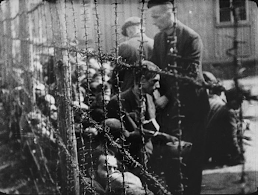
Achebe draws a direct parallel between the vultures and a Nazi officer—specifically, the Commandant of Belsen concentration camp, a site of immense human suffering during the Holocaust. The poem describes how this officer, after overseeing mass executions, returns home to his family, stopping on the way to buy chocolates for his child.

This image is deeply unsettling because it suggests that immense cruelty can exist alongside ordinary, even tender, human behavior. Just as vultures devour the dead but can still express affection, the Nazi officer participates in genocide but remains a loving father. Achebe forces the reader to confront this moral contradiction: can love and evil truly coexist within the same heart?

3. The Banality of Evil and Moral Ambiguity

The reference to the Nazi Commandant aligns with Hannah Arendt’s concept of the “banality of evil,” which argues that great atrocities are often committed not by inhuman monsters but by ordinary people who see their actions as routine (Arendt, Eichmann in Jerusalem, 1963). Achebe’s portrayal of the officer highlights this unsettling truth—evil is not always loud or dramatic; sometimes, it is mundane and carried out by those who simultaneously lead normal, affectionate lives.

By linking the Nazi officer to vultures, Achebe suggests that just as scavengers operate by instinct, so too can human beings commit acts of cruelty without deep moral reflection. This raises a chilling question: is evil a conscious choice, or is it embedded within human nature like an instinct?

4. Hope or Despair? The Unanswered Question

The poem’s concluding lines leave the reader in a state of moral uncertainty. Achebe presents two possible interpretations:

  • One could praise “bounteous providence” for allowing even the cruelest individuals a small “glow-worm tenderness” within their hearts. This suggests that love, no matter how small, can still exist even in those who commit horrific acts.
  • Alternatively, one could “despair” because within that very spark of kindness lies the perpetuation of evil. If cruelty and compassion can coexist, then the presence of love does not necessarily prevent atrocity—it may, in fact, allow it to continue.

Achebe refuses to offer a simple answer, leaving the reader to grapple with the complexity of human morality.

• Conclusion

Chinua Achebe’s Vultures is a haunting exploration of the coexistence of love and brutality, using the imagery of scavenger birds and a Nazi officer to force the reader to confront the unsettling duality of human nature. By drawing a connection between vultures and the Nazis, Achebe challenges the notion that morality is absolute. Instead, he presents a world where tenderness and cruelty can exist within the same being, raising profound questions about the nature of evil.

The poem serves as a powerful critique of historical atrocities, colonial oppression, and the moral contradictions that define human existence. Achebe’s message remains relevant today, reminding us that the capacity for good and evil often resides within the same heart—and that recognizing this reality is crucial for understanding history, power, and justice.


Thank you for visiting!😊 


•Reference:

  • Achebe, Chinua. Vultures. In Collected Poems, 2004.

Book Review of Yaar, Papa

  Hello everyone, I am Kavita Chauhan  Now ,so many days after i write my book review of the hindi literature book " yarr, papa ' b...